Researchers have engineered a cancer vaccine that taps into the widespread immune memory for the SARS‑CoV‑2 Spike protein, aiming to boost T‑cell attacks on tumors.
Mechanism that links viral memory to tumor targeting
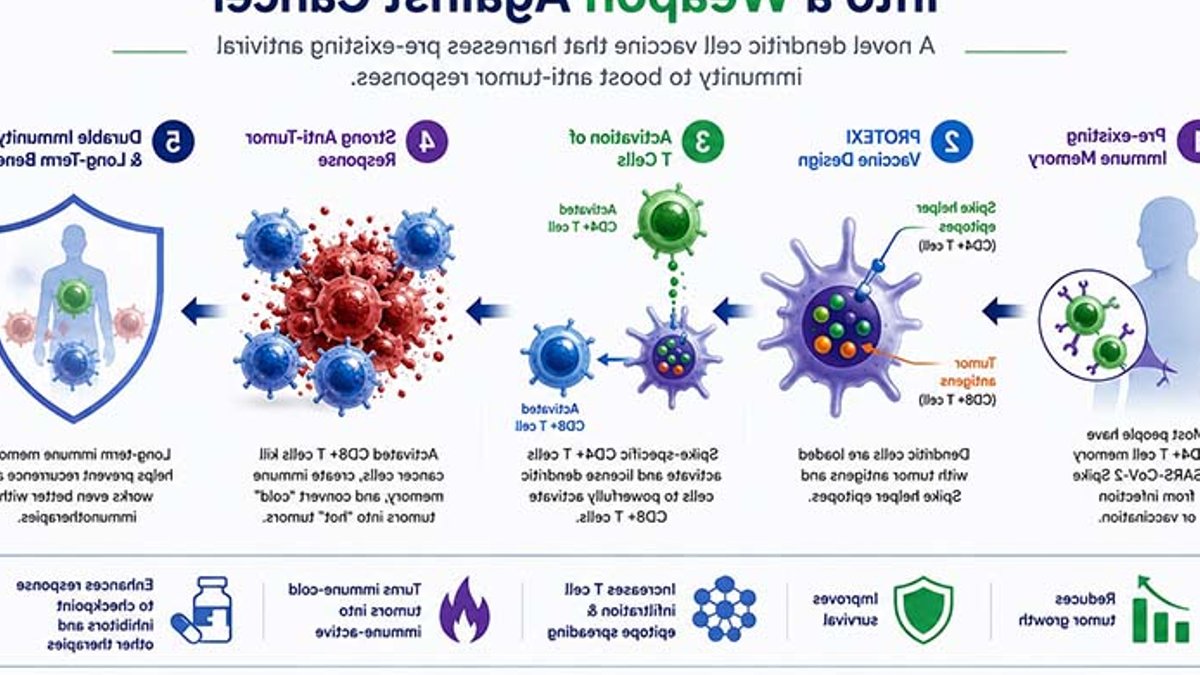
The experimental product, named Protexi, loads dendritic cells with two types of peptide fragments: one derived from the viral Spike protein and another representing a tumor antigen. The Spike fragment is recognized by helper T cells, which then signal dendritic cells to fully prime killer T cells against the cancer marker.
Helper T cells, traditionally labeled CD4⁺, act as conductors, directing the cytotoxic response. By pairing a known, highly immunogenic viral epitope with the tumor‑specific piece, the designers hope to overcome the low response rate—about 15%—seen with conventional dendritic cell vaccines.
Because most adults have either been vaccinated or infected, the platform assumes a ready pool of Spike‑specific memory cells. Studies cited in the report indicate that such memory can persist for 2 to 4 years after vaccination and up to 17 years after SARS‑CoV‑1 infection.
Preclinical outcomes in mouse models
In one trial, mice received engineered helper cells that recognized the viral epitope before being treated with Protexi. All subjects survived to day 40, while only 40% of those given a standard dendritic cell vaccine lived that long.
A melanoma experiment showed five of seven mice with tumors smaller than 200 mm³ by day 26, a size considered sub‑threshold for aggressive growth.
The study also notes that over 80% of the U.S. population and 65% worldwide have completed the COVID vaccination series, providing a broad base for the approach. Even individuals who missed the shots often carry natural infection‑derived memory.
“Spike‑specific CD4⁺ T‑cell memory is broadly durable across the population that’s been vaccinated or infected. Indeed, this is the whole premise the platform depends on,” the paper quotes co‑author John Letterio as saying.
Related: Merck and Moderna Unveil Personalized Cancer Vaccine
One flat paragraph of data: the vaccine uses Spike‑derived epitopes, the mouse model showed 100% survival, and tumor measurements fell below 200 mm³ in the majority of cases.
Why the concept matters beyond the lab
Historically, helper T cells were known to be essential for robust killer T‑cell activation against cancers lacking MHC‑II presentation. More recent work confirms that successful immunotherapy often requires both cell types. However, identifying suitable helper epitopes has been a bottleneck.
Leveraging a viral protein already mapped across populations sidesteps that hurdle. The authors argue that any durable, widely shared helper epitope could serve the same purpose, suggesting a template for future vaccine designs.
“If a given patient’s response turns out to be too weak, the platform has a built‑in fallback: in mice, we showed that a short ‘priming’ dose of Spike/ovalbumin‑loaded dendritic cells beforehand restores a strong CD4 T‑cell response even without pre‑existing immunity,” Letterio explained. Ovalbumin, a chicken egg protein, acted as a stand‑in for Spike in those tests.
From a broader perspective, this strategy illustrates how a pandemic‑driven immune imprint can be repurposed for unrelated diseases. By converting a universal viral memory into a therapeutic lever, the approach may shorten development timelines for personalized cancer immunotherapies, which often grapple with patient‑specific antigen discovery.
Next steps toward human trials
The team, a collaboration among Celloram, Case Western Reserve University and University Hospitals Cleveland Medical Center, is preparing an investigational new drug (IND) filing with the FDA. The first human study will target sarcoma patients at the Angie Fowler Adolescent & Young Adult Cancer Institute.
Letterio emphasized that the concept could extend beyond the Spike protein, noting, “Any CD4 T‑cell epitope that a patient already has strong, durable memory against should, in principle, be able to serve the same helper function.”
Regulatory reviewers will assess safety data from the animal work and the feasibility of manufacturing dendritic cells loaded with dual epitopes. If successful, the platform might offer a new avenue for cancers that have resisted existing immunotherapies.